The Brazilian Paper Trail

No, not lines of used wax strips, but a bureaucratic necessity for life in Brazil – the all important receipt.
There is what seems to be an over-complicated exchange of goods, money, and three times the amount of paper in Brazil. And at first glance it’s a bit odd.
Like the restaurant in Rio for example, where you are given a card as you enter. When you take a plate of buffet food to the counter to be weighed, the card is swapped for a piece of paper which details all you are about to consume. Following dinner and a few beverage additions to the paper, you take the slip to the cashier at the door. She hands you your receipt and a note to give to the doorperson who is standing less than a foot away. The note is your permission slip to exit. Sounds complicated for a plate of food right?
If you by chance forget to pick up your receipt, with your worldly western ways, then you’ll probably get an odd look or two from the Brazilians.
That’s because the ‘nota fiscal’ is quite important for their financial management. In Brazil, you can buy things such as groceries or most small to large goods on monthly credit payments (4x, 10x…).
In Australia, credit seems to come in just the one payment, and you have to sign up for different interest free purchase offers with other providers. But in Brazil, Visa and MasterCard offer the opportunity to purchase through monthly credit payments.
And there is no end to the variety of credit and debit cards you are likely to encounter in Brazil.
With all these payments happening at any one time, it helps to have the receipts at the end of each day in order to work out just how much you might be owing or have left to spend.
So what might seem to be an overzealous obsession with the paper trail might just be the signs of good, if not slightly complicated, financial management.
Sweet ‘dis position – Pão de Açúcar






The first time I visited Rio, I was living there for 3 months, so there was no rush to do all the touristy things. So out of a little bit of laziness and perhaps a smidgeon of procrastination, I missed out on going to see the view from the Pão de Açúcar (Sugarloaf).
If I’d have known how spectacular the view is, I would have probably gone there a dozen times in those three months. This time I was sure to have it on my to-see list, and it didn’t let me down.
After catching the first cablecar to the first of its two peaks, the vista was spectacular already with sweeping views of all the key places in Rio – Centro, Copacabana, Ipanema, Niteroi, Guanabara and Botafogo.
But the view is gobsmacking when you catch the second cablecar to the peak. Despite the crowds – the feeling was transcendent.
My tips on best time to go… At least an hour before sunset, so you can get a view of Rio by day and by night. Make sure you get up to the top just before sunset so you can enjoy the best view.
Cost is about 40 Reais and cablecars travel every 20 minutes. Each car carries only 60 people so make sure you get in the line early or you might wait and miss out!
Rocking The Rio Beach Life
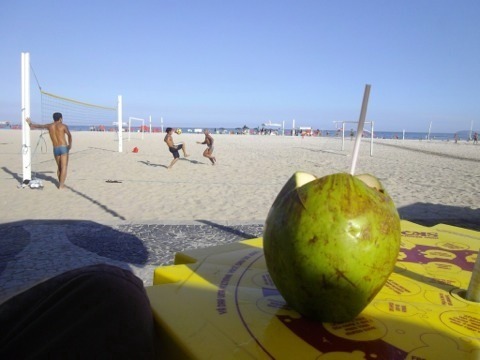
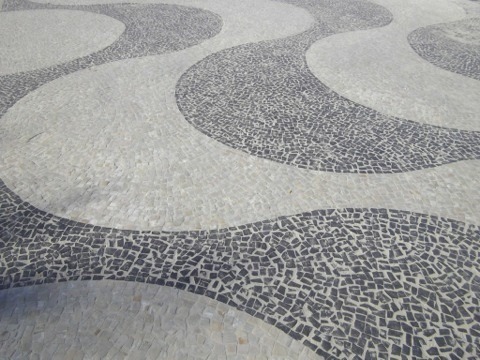
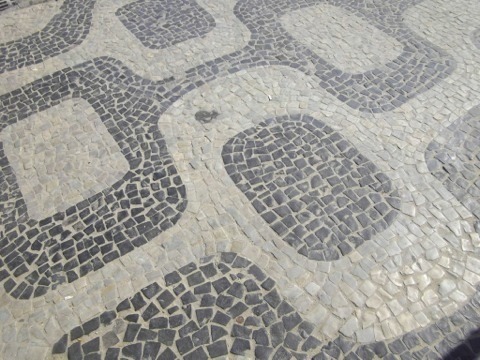
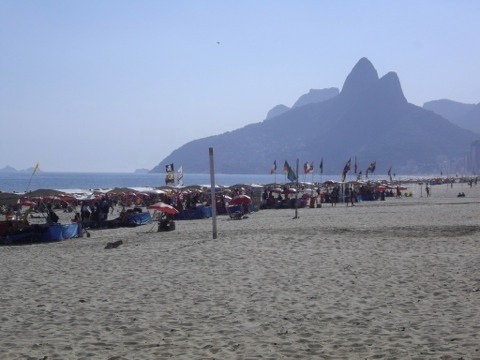
Brazilians are really into their black and white rocks… Many of the cities have ornate sidewalks which must take days to create out of small pieces of colored rock.
In Rio, two designs in particular mark the calçadãoes (sidewalk promenades) of its most famous beaches, Copacabana and Ipanema. The designs have been adopted with a sense of pride and place by its inhabitants, and have come to symbolize the spirit of the beachside communities.
For Rio, beach life is kind of like Australia’s cafes… People meet here to chat, drink and share lifes moments together.
It’s sometimes hard to know where to meet amongst the crowds, but everyones so easygoing that it doesnt matter if you don’t end up finding them!
My advice for a great day on the beach in Rio…
– Choose a ‘barraca’ or serviced tent and grab a chair and umbrella. It’s a good idea if you plan to stay there a while.
– Tents are the best way to find someone as well. Let your friends know which tent you plan on staying in front of and it makes it a little easier to find you.
– Take only what you need for a great day at the beach. Sunscreen, sarong, some money, a book. Everything else you can get there and ask someone to mind your stuff while you take a dip. It’s common practice…
– Forget the boardshorts. The speedo or square ‘sunga’ is the way to go here…
– Try the foods on offer. Queijo coalho (haloumi like cheese) and açai are my favorites. Oh and agua de coco, the coconut water!
– You can almost buy ANYTHING on the beach in Rio. I’ve seen people selling carpet, no joke…
Reconnecting with Rio

Rio has changed so much in the past six years since I was the Boy from Ipanema… And it’s a change for the better!
The city is far safer (in most of the tourist spots) than it was during my last visit. Which means that all there is for you to do is enjoy the marvelous life that the ‘cidade maravilhoso’ has to offer.
My first day I spent connecting with all the places I had missed so much… Ipanema, my old apartment, my favorite cafe, and of course having an açai with banana by the beach!
No matter how prepared you are, the first time you go to the beaches here, you always feel like a complete foreigner… But the feeling passes overnight and then you can just relax and enjoy this stretch of paradise.
Cariocas, Rio’s locals, can be profoundly annoying to tie down to times, as a general rule, but once you accept this and move on, you’ll find the other Carioca characteristics that make them so charming. Wide smiles, good humoured, friendly and always with their finely tuned bodies on display, the Cariocas are excellent at making tourists feel welcome.
The Hostel Crasher
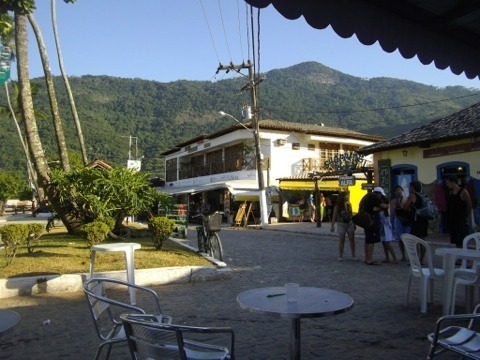

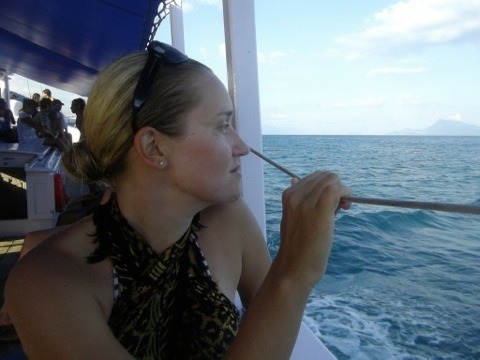
As mentioned, it’s not that easy meeting people at pousadas versus hostels – so I decided to hostel crash.
It’s easy because no one really knows where you are staying, and you can meet people at the same time. Just act like you sleep there and if there’s more than fifteen people there you should just blend right in. Hehe
So I met up with Kate (NZ), Katy (UK), Shaun and Michael (AUS) and we went out on the ‘town’ in the evenings.
After drinking a few beers at the hostel, we headed down to the beach…
There, under a large tree, was a cool bar with hanging lights and funky decor. On one side of the bar, a line of hookah pipes awaited with different flavours to experience. On the other side, cheap caipirinhas of all flavours wait patiently for thirsty travelers.
The night passes with noisy laughter, drinking and a slow walk back alongside the beach to return to the pousada. Then, all too soon, my time on Ilha Grande has come to an end, and we are on a boat heading for the marvelous city, Rio de Janeiro.
The Grandeur of Ilha Grande
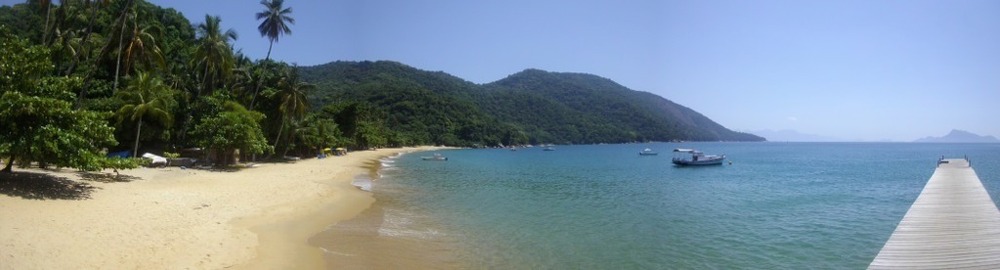
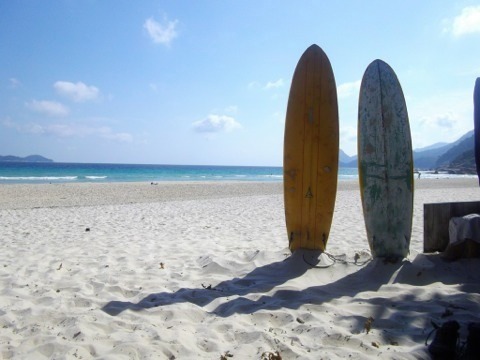
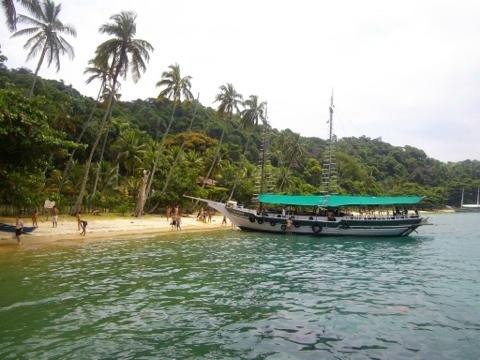
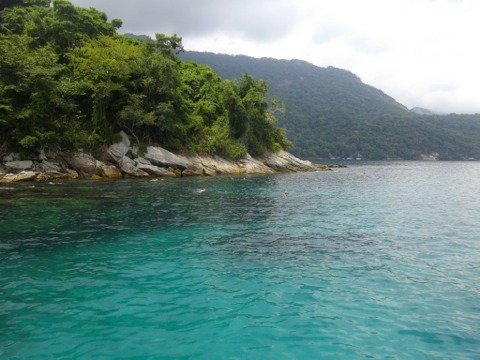
I had believed the massive grey shape across the bay on the horizon to be the mainland, but no, it turned out to be my next destination.
Ilha Grande, aptly named as this island is huge, is mostly an untouched paradise just south of Rio de Janeiro, next to Angra dos Reis.
After docking the ferry at Vila Abraão, pop 6,000, we were greeted by six sandy streets of tourist shops, restaurants, pousadas and bars to choose from. This is the only real village on the island and the main hub of activity.
I grabbed my backpack and walked onwards, asking along the way how to get to my pousada. It turned out to be both awesome and quaint.
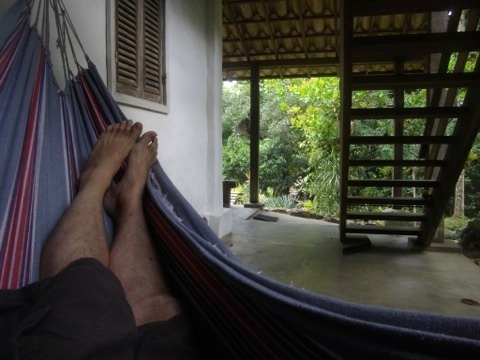
A hammock at the front, which you can sit in and read, while small monkeys play in the trees above. The pousada host was friendly, if not a little deaf, so he didn’t quite understand every question, but happily responded to whichever question he thought he heard.
The place was charming. The only downside to pousadas are that they are not as easy to meet other people as at the youth hostels, but then again, you do get your own room, and no one tries to have sex in the bunk above while you sleep. Hehe. Ahhh hostel life…
The island has an interesting history, and was once a leper colony, and also contained a number of prisons. Oh to be trapped in paradise! The unsavory past has helped it’s future though, as the island remained largely undeveloped.
While on Ilha Grande, which is as close to a natural ecosystem that you can still access, there’s plenty to do. Schooner trips, diving, surfing, hiking along the many trails, and bathing in the waterfalls just to name a few…
This island should definitely be added to anyone’s Brazil travel itinerary without hesitation.
Schooners Aplenty at Paraty
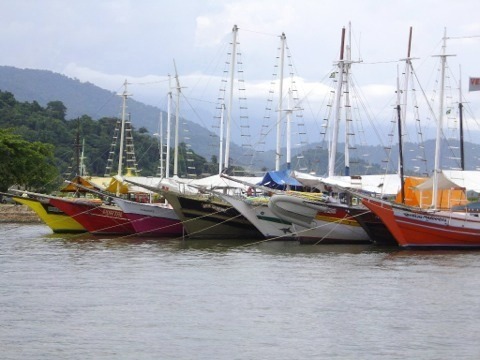
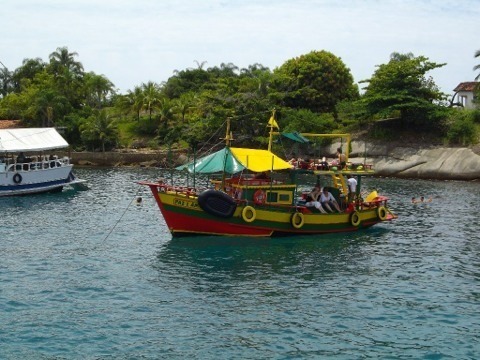
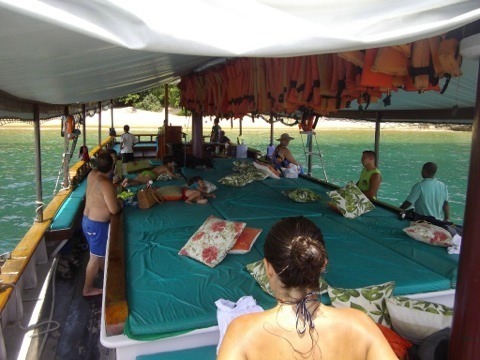
The boat never really leaves when it’s meant to. If the opportunity for more passengers and money presents itself, then the crew eagerly take it.
Soon we have enough for a respectable departure, and we set off amidst cloudy uncertainty in the weather.
But 20 minutes into the cruise, or ‘passeio’, the sky gives up its fight with the sun, and lets it stream down around us.
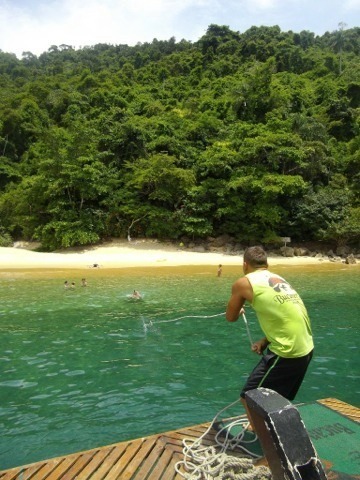
Suddenly we stop, drop anchor, and it’s time for a snorkel while hordes of fish of all descriptions surge around the swimmers.
João picks up his guitar, and starts singing slow Brazilian tunes for the rest of the passengers as we dry off and head to the next lagoon or ‘praia’ (beach).
At the end of the day, after numerous stops around paradise and a fantastic seafood lunch, the schooner makes its way back to the picturesque port of colonial Paraty.
We dock, and all too soon, the day spent adrift is anchored back to reality once more.
Finding My Feet At Tobogã
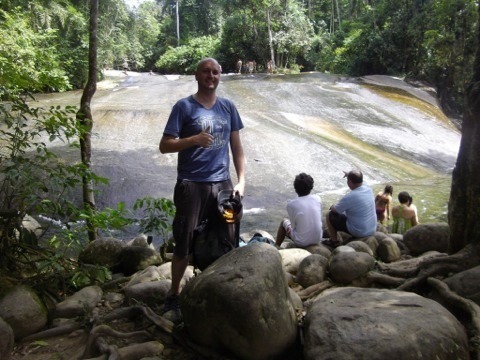
The shrieks of excited children can be heard long before your trail to the waterfalls comes to an end.
And then that strange extended ‘mushy’ whoosh sound followed by a loud splash is finally explained. A smooth moss covered rockface, worn down over time, forms a natural waterslide down to the pool of water below.
Young kids, egged on by their parents, take cautious turns sitting or lying down and sliding the ten metres or so into the cool freshness of the mountain water below.
Then it’s the teenagers’ turn… not content with the simple pleasures, they prefer to surf down the slippery rock face on foot – dangerous, yes, but thrilling to watch.
I can barely make it across the flat slippery path without falling over at the top of the Tobogã, (or toboggan). The kids glide past me with grace and ease.
I think that this time, even with travel insurance on my side, I might stick with the ‘lying down’ option…
Locals here practice at the Tobogã for the annual ‘surf’ competition. That’s when you’ll see the most thrilling and daring moves come out…
Losing Ones-self In History
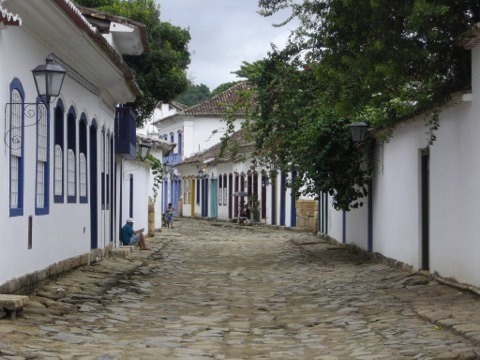
It’s late in the afternoon, as the bus from Ubatuba shuffles into town. The golden tinge of the setting sun filters through to the colonial dwellings of Paraty.
A once important port for the transport of gold from Brazil to Portugal, the town is now a haven for tourists and artists keen to capture the essence of colonial Brazil.
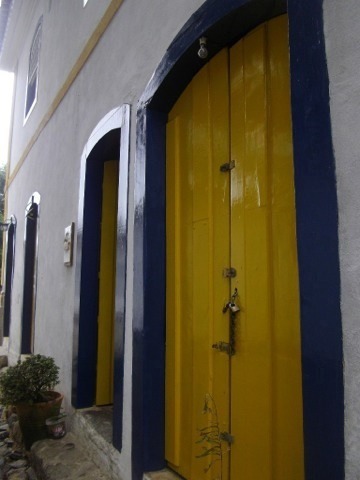
After a quick refreshing shower at the pousada, it’s back out onto the cobbled streets for a closer look. Most of the buildings, particularly those in the historic centre, are painted white, with the only splashes of colour permitted are on the doors and their frames. It makes for an enticing photo.
The closer you get to the centre, the more Paraty’s charm takes over and you forget you are a tourist in what is quite the tourist attraction. It’s no wonder you see artists with easels out in the streets painting famous scenes of Paraty – this place is blooming beautiful. Touristic – yes. But there’s plenty of places to still lose yourself a little and grab some alone time with the village.
As I head into town, the sun sets and soon the colour of purple evening light adorns Paraty’s whitewashed walls. Night lights soon lead the way to street markets, musicians, shows and some amazing restaurants and ice cream shops.
You might not be able to lose yourself completely in Paraty’s few cobblestone streets, but you’ll definitely lose track of the time you spend in them…
Traveling by bus…
Air conditioning… a pure luxury!
But who needs it when you’re in Brazil and want to sample the local lifestyle, where sometimes the memorable experiences are the ones without the luxuries… like catching a local intercity bus…
Closing your eyes as you bustle down the road, you can smell the different aromas; smoke from a wood fire cooking something delicious, the different fruit trees, like the jack fruit, and hear the constant sound of Brazilians conversing, greeting each other and signaling for a stop.
For me, it’s a great way to meet people too…
On the trip from Sao Paulo to Ubatuba, I had the privilege of sitting next to Raquel and Rafael. Rafael was just 8 and was heaps of fun during the journey. He became a very quick learner of how to play Angry Birds on the iPhone, and I must say it was fine trying to translate what you need to do to play the game in Portuguese.
He wanted to know all about kangaroos too, and how high they jump, and whether we ride them..
Afterwards I offered him and his mother one of my favourite chocolate biscuits (Passatempos), and he turned to his mum and said, “I like him, he’s really cool”…
Raquel works in Sao Paulo part time and then heads back to home near Ubatuba, which must be difficult to live in two places at once, three hours apart by bus. They gave me a smile as they hopped off and told me how long it would be until the next stop.
Just two of the many cool people I have been fortunate enough to meet while on buses in Brazil.


 Tales of The Brazilianaire